Recently I’ve seen a lot of articles written about burnout. In essence they refer to burnout being a state of emotional, physical, and mental exhaustion caused by excessive and prolonged stress. People who are burnt-out may be cynical, detached, and have feelings of ineffectiveness and lack of accomplishment.
I’ve experienced burnout myself and watched others pull themselves out of burnout. What I’ve learned is that prolonged stress doesn’t always cause burnout – people can thrive under periods of prolonged stress. This type of stress is “eustress”.
I’ve had high pressure jobs where I’ve routinely worked 12+ hour days. My various managers commented “you should take some time off or you’ll burnout”. At the time I didn’t feel like I was burning out, and in hindsight I don’t think these managers had any idea what burnout was or what caused it. Most likely they were projecting their own inability to cope in a similar situation onto me, rather than understanding what makes me tick.
I loved my job. Yes I had a massive workload, but when I woke up in the morning I was invigorated by the thought of going to work. I didn’t work long days through obligation, I worked long days because I chose to. (OK, there might have been a tiny bit of obligation – but I believed I was contributing to something bigger than just myself.) While there was consistent pressure and stress at work, it was a “good” stress. The type of stress that produced passion, not the heart-attack inducing, cortisol producing stress.
In contrast, I’ve had a role where I’ve routinely worked eight-hour days. I had very little work to do and took two-hour lunch breaks to help fill in the time. I didn’t feel part of a team and lacked connection to other people. The role was mentally and emotionally unfulfilling. I was frustrated, cynical and disengaged. This went on for the better part of a year. This experience taught me that you don’t have to work long hours or have a massive workload to burn out. For me, lack of connection with other people, coupled with the lack of control and no sense of fulfillment caused burnout. This type of stress is termed “distress”.
There’s great little quote from Simon Sinek that summarises my thoughts into a few simple words: “Working hard for something we don’t care about is called stress: Working hard for something we love is called passion.”
The road to recovery from burnout is unique to each person. For some people it might be taking a holiday to get physical distance from work and recharge their batteries. That approach didn’t work for me because the same problems were still at work when I returned from holiday. Maybe I could have tried harder to have a better attitude towards my situation, but when there’s no one meeting you half-way, its difficult to maintain a positive attitude. For me, leaving an unfulfilling role was the solution to burnout.
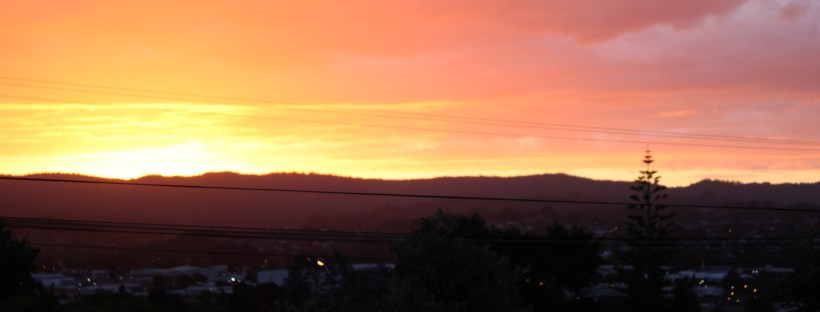
Photo: Sunset over the Waitakere Rangers, Auckland.
 Sideways Trajectory